

Facing Outward: Relational Therapy in a Fractured World IARTA Conference Audio Recordings – Carole Shadbolt Introduction & Helen Rowland Keynote Address —- SERIES TWO
Full-Length Keynote Address —
At a time marked by political upheaval, war, climate crisis, mass displacement, and deepening social fractures, the question “How do we rise to the level of events?” has never felt more urgent. This IARTA conference—Facing Outward: Relational Therapy in a Fractured World—was held at a moment when therapists across disciplines were grappling not only with the suffering of their clients, but with the collective wounds shaping our shared world.
These audio recordings capture two essential contributions from the day: an opening introduction by Carole Shadbolt, and an extended, deeply incisive keynote by Helen Rowland, both speaking directly to the challenges of doing relational work within a landscape of global rupture.
Carole Shadbolt — Facing into the Pain: Silence, Powerlessness and Moral Injury (Opening Introduction)
 Carole Shadbolt sets the tone for the conference with a reflective and clinically resonant introduction that invites us to consider how overwhelming social forces enter the consulting room. Drawing on Winnicott’s idea of the “incommunicado self”—the silent, hidden nucleus of the psyche—she explores moments when clients and therapists struggle to put experience into words.
Carole offers a timely exploration of moral injury, a concept that helps frame the guilt, helplessness, and conflicted responsibility that can arise when we witness harm yet feel powerless to intervene. Her introduction provides an essential grounding for the larger themes of the conference, orienting us to the emotional, ethical, and relational terrain that therapists must navigate in a traumatised world.
Helen Rowland — Facing the Field: Critical Psychotherapy and the Social Turn
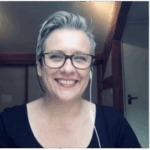 Helen Rowland’s keynote forms the heart of the conference—a wide-ranging, deeply thoughtful examination of relational psychotherapy at a time when collective trauma, political identities, and societal narratives are increasingly present within clinical work.
Helen asks the pressing questions:
- How do we stay present to the social and political forces that shape our clients’ lives—without collapsing into debate, certainty, or alignment?
- How do we hold the “social field” while remaining rooted in deep psychic inquiry?
- How can therapists avoid replicating oppressive dynamics, even unconsciously, within the therapeutic dyad?
Offering both critique and guidance, Rowland addresses the social turn in psychotherapy with maturity and compassion. She challenges us to hold complexity without splitting, to witness suffering without retreat, and to maintain a clinical frame that is ethically responsive, relationally attuned, and capable of bearing the weight of the world as it enters the room.
Her keynote is essential listening for anyone committed to practising relational psychotherapy with intelligence, courage, and integrity in today’s fractured global climate.
Together, these recordings offer a vital resource for clinicians, trainees, and supervisors who are searching for ways to work relationally—and responsibly—in a world where personal and collective trauma are inextricably entwined.
This two-part conference recording is especially relevant for those in the psychotherapy and counselling fields, though practitioners from related disciplines may also find it invaluable.
✅ Watch anytime, anywhere — as you explore the conversations that refuse to stay silent — and discover how they can transform your relational practice.
✅ Earn CPD — let us know once you’ve completed the recording to receive your certificate.
BUY NOW – £30.00
Audio lecture 1hr and 40 mins – This webinar was originally recorded on the 15th November 2025 at the IARTA Annual Conference.
Helen Rowland (she/her) MSc (psychol), CTA (P), TSTA (P) is a psychotherapist, supervisor, and trainer in independent private practice in the Scottish Borders and online. Over the past 30 years, she has developed her interest in working with the sociopolitical in a clinical setting and has contributed papers and book chapters on queer theory, postmodernism, gender identity, and critiques of the sociopolitical function of CBT. She has been a coeditor of the Transactional Analysis Journal since 2018.
Carole Shadbolt lives and practices in the United Kingdom. In a long career, she originally trained as a social worker and worked both as a generic as well as a specialist psychiatric social worker at The Maudsley Hospital, part of the Institute of Psychiatry in London. She qualified as a Transactional Analyst Metanoia under the tutelage of Petruska Clarkson, Sue Fish and Maria Gilbert. Carole worked as a tutor for many years at Metanoia Institute on their MSc in Relational Transactional Analysis programme. She maintains an independent psychotherapy and supervisory practice in Oxfordshire. A relational psychotherapist by instinct, Carole is a published author and a founder member of the International Association of Relational Transactional Analysis and serves on their Steering group. She has been “out” since the late seventies, and her abiding interest is in LGBTQ + issues and diversity.
Interested in Relational TA? Become a member now
Receive access to valuable content