
“Psychic Truths” The Unconscious Made Known, Jo Stuthridge & Ed Novak
Event Overview
An online IARTA conference — November 2026
We are delighted to welcome two distinguished Transactional Analysts, joining us from opposite sides of the globe, for IARTA’s conference this November: Jo Stuthridge and Ed Novak.
This is our first-ever fully online conference, an exciting new venture for IARTA, and one that allows us to bring together two much-admired authors, teachers, and thinkers from either end of the world, without the constraints of travel or geography.
Across two thought-provoking sessions, Jo and Ed will explore psychic reality, unconscious processes, embodiment, and themes central to Relational Transactional Analysis that shape how we understand truth, pain, and the unseen forces that shape our clinical work and our lives.
These sessions promise rich, generative thinking and space for genuine dialogue with two leading voices in our field.
 Jo Stuthridge
Bearing truth and pain: two ways of knowing
Abstract: At the heart of psychotherapy lies the shared task of bearing emotional truth and pain. This task is inherently paradoxical due to the human tendency to both seek and avoid truth. A relational psychotherapy provides a theatre in which these opposing forces are enacted, allowing painful emotional realities to become thinkable. This paper proposes that psychic truth emerges through two complementary ways of knowing held in a creative tension. The first is a logical mode, focused on tracking recurring patterns within the client’s history and the therapeutic relationship. The second is an aesthetic mode grounded in reverie, imagery and feelings. Clinical vignettes illustrate these ideas.
Jo Stuthridge MSc, APANZ is a Teaching and Supervising Transactional Analyst and a registered psychotherapist in Aotearoa, New Zealand. She maintains a private psychotherapy practice in Dunedin. She is a past director of the Physis Institute, which provided training in transactional analysis for over 20 years and has published several articles and book chapters on transactional analysis. She continues to write, reflect and teach within the international TA community.
Jo can be reached at jo@jostuthridge.co.nz
 Ed Novak
The body keeps more than the score: Unconscious processes that cannot be fully accessed through words alone.
Abstract: As our profession continues to integrate mind and body, therapists must consider both psychic and embodied pathways to the unconscious. The body holds relational, transference, and unconscious processes that extend far beyond explicit memory and conscious thought. Integrating transactional analysis with body analysis also opens pathways to preverbal experiences encoded primarily in the body rather than language. While words remain essential, they are not always sufficient to access the deepest layers of unconscious experience. The unconscious is not only represented symbolically in the mind; it is also lived, communicated, and transformed through the body within the transference-countertransference relationship. This keynote will explore how an embodied therapeutic relationship can facilitate access to these implicit processes.
Edward T. Novak is a psychoanalyst in private practice in Akron, Ohio, USA. He has presented at international conferences and published numerous journal articles, as well as the book Physical Touch in Psychoanalytic Psychotherapy: Transforming Trauma through Embodied Practice (Routledge, 2023). He served as book review editor of the Transactional Analysis Journal for ten years, through 2024, and continues to serve on the editorial review board. In 2026, he received the Eric Berne Memorial Award.
He can be reached at edtnovak@gmail.com.
Workshop Options
Please see 4 workshop options below. We invite you to think about which workshop you would like to attend on the Saturday of the conference. Breakout rooms will be available, and you will be given the option to click on the workshop you wish to join. Each workshop will last approximately an hour and a half.
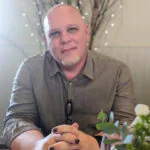 What happens when the contact we seek is not the contact that is possible? Presenter Hendri Cawood (he/they)
As a person with ADHD, I have been thinking, hyper-focused, on the longing for contact that has been denied, missed, or unreciprocated. Being queer, neurodivergent, and dyslexic, I know what it feels like to ask for connection and find that the shape of my asking does not match what the other person can give.
I want to invite us to explore this together. Let us look at the edges of what contact is, how we ask for it, and where it sits in our theory and clinical work with a light focus on the OK Corral and stroke theory.
But first, I want us to just feel it. Let that feeling guide us into wondering: what if we could ask for and receive connection without shame, guilt, or Rejection Sensitivity? What happens when we can accept whatever comes back to us, including a lack or loss of contact?
Hendri is a London-based psychotherapist and the founder of Unscripted Minds, currently in their final MSc year at the Metanoia Institute and working toward his CTA. As a queer, neurodivergent, and dyslexic practitioner, he applies relational TA in a narrative, co-creative way, specialising in neurodiversity, trauma, and identity, while paying attention to where intersectional boundaries overlap with privilege.
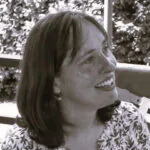 Crime and Punishment Presenter Cécile Buckenmeyer
And I have drafted a couple of sentences here:
What is ‘evil’? How does evil become manifest in someone’s psyche and therefore in our clinical work? My encounter with a young man abruptly confronted me with these questions. The literature about evil comes mostly from theology and philosophy.
In the context I was in, I didn’t find it very helpful. But I found guidance in literature, especially Dostoevsky’s Crime and Punishment. Through images and symbolic narratives from the Bible, literature and the dreams of those who have committed ‘evil’, I was able to formulate some reflections about the nature of evil.
In this presentation, I will share these reflections based on my subjective experience as a Jungian analyst and illustrate how it offered me a new perspective on humanity.
Cécile is a Jungian analyst in private practice in Lancaster. She trained at the C.G. Jung Institute in Zürich, where she is an accredited training analyst. She is a member of the IAAP (International Association for Analytical Psychology) and a senior member of IGAP (Independent Group of Analytical Psychologists).
 Considering the impact of AI on our TA Exam System Presenter James Longwell
For the past 12 months, James has been leading a dedicated group of volunteers in a joint ITAA / EATA project to update the guidance, policy and approach around the impact of AI on our exam system.
In this workshop James will take you through some of the findings of the working group and engage the group in a discussion on the key ‘hot topics’ that need input from IARTA members. (Similar sessions will be run with other national associations). And of course, there will be lots of opportunity to discuss and consider the inescapable impact of AI on our professional and private worlds.
James Longwell is a UK based PTSTA(O) who runs both an Organisation Development (OD) consultancy and an Organisational TA training and supervision practice. (Also an IARTA member for many years.) His previous career spanned various OD roles in Global organisations such as Google, NBCUniversal, Cadbury & Peugeot. His TA approach is both systemic and relational. Within TA James is the Chairperson of the Transactional Analysis Podcast and the TA AI working group. When not TAing James can be found hanging out with one of his multiple four-legged friends.
 Exploring the Shadow: Dark and Light Presenter Pippa Fairhead
A Creative and Experiential Workshop
This 90-minute workshop explores the Jungian concept of the shadow, considering both the darker aspects of ourselves that we may reject or disown and the positive qualities and potential we may struggle to recognise or embrace. Through reflection, shared exploration and creative exercises, we will consider how the shadow may reveal itself, how we might begin to recognise, reclaim and take ownership of these hidden aspects of ourselves.
The workshop offers an opportunity for curiosity, self-discovery and a deeper understanding of ourselves, both personally and as therapists. If possible, bring materials to be creative with, if you don’t have there will be alternative ways of working to engage with the workshop content.
Pippa Fairhead is a UKCP registered psychotherapist and supervisor, and a PTSTA (P).
She holds a Master’s in Transactional Analysis Psychotherapy and a Postgraduate Certificate in Teaching (Counselling and Psychotherapy). With over ten years clinical experience, Pippa works with individuals across a wide range of backgrounds, challenges and life transitions in private practice on the South Coast and online. Her approach combines relational Transactional Analysis, Humanistic practice, dream work and symbolism – drawing on these to create a flexible and framework tailored to each person. She is particularly interested in the inner life; images, symbols and stories through which we make sense of our experiences.
Conference day structure
Friday 20th November 2026
6:30 Opening
7:00
Guest speaker – Jo Stuthridge
Q and A
Followed by a discussion or a panel
21:30 Close
Saturday 21st November 2026
9:30 welcome / AGM
10.00 “Explorations” Workshops
11.30 Coffee
11.45
Guest speaker – Ed Novak
13:30
Close and goodbyes
£70.00 members/£80.00 non-members.
Ticket sales will end Thursday, 19th November, at noon.
The Zoom Link will be sent out to all participants the day before the event.
Interested in Relational TA? Become a member now
Receive access to valuable content